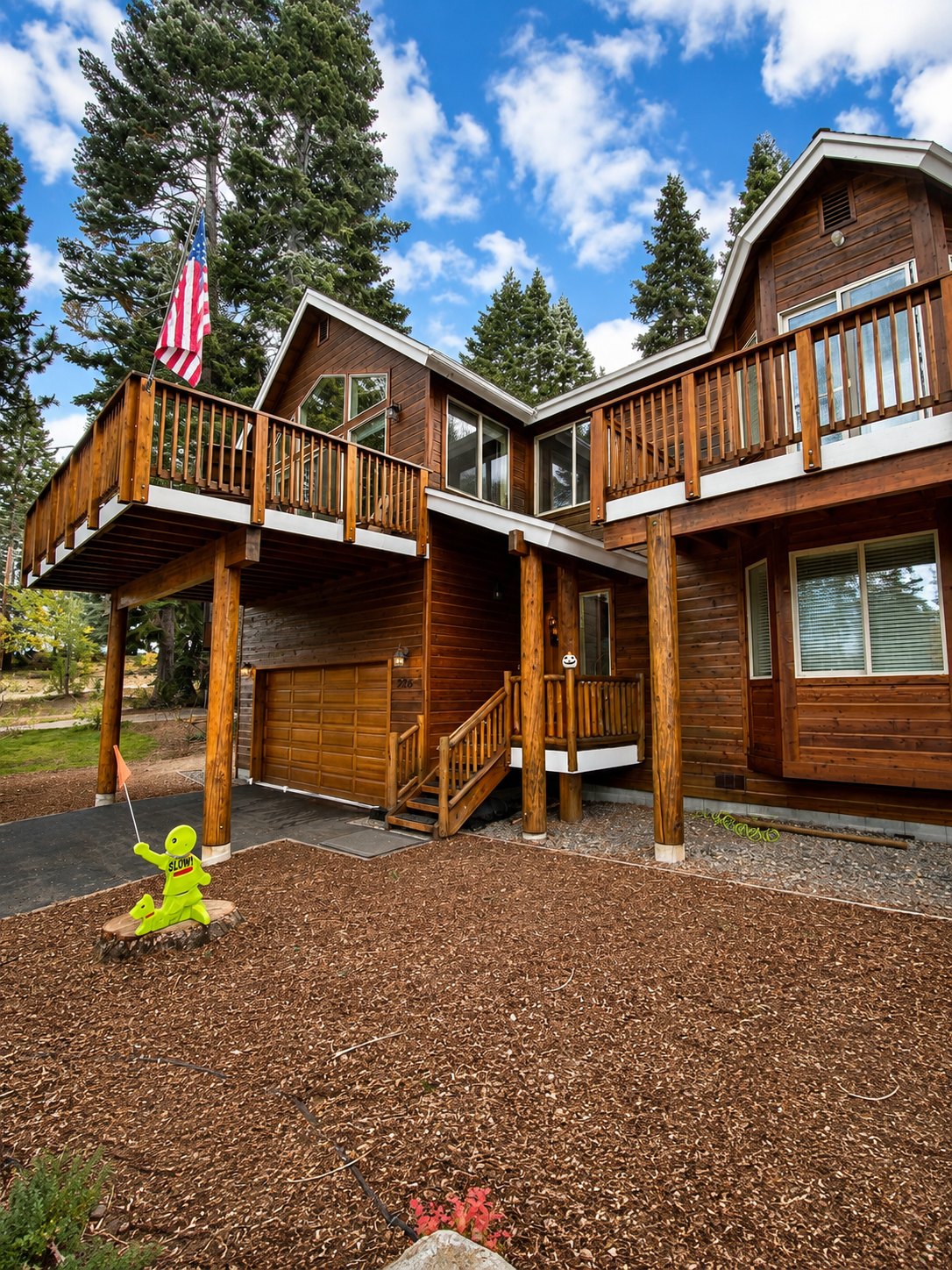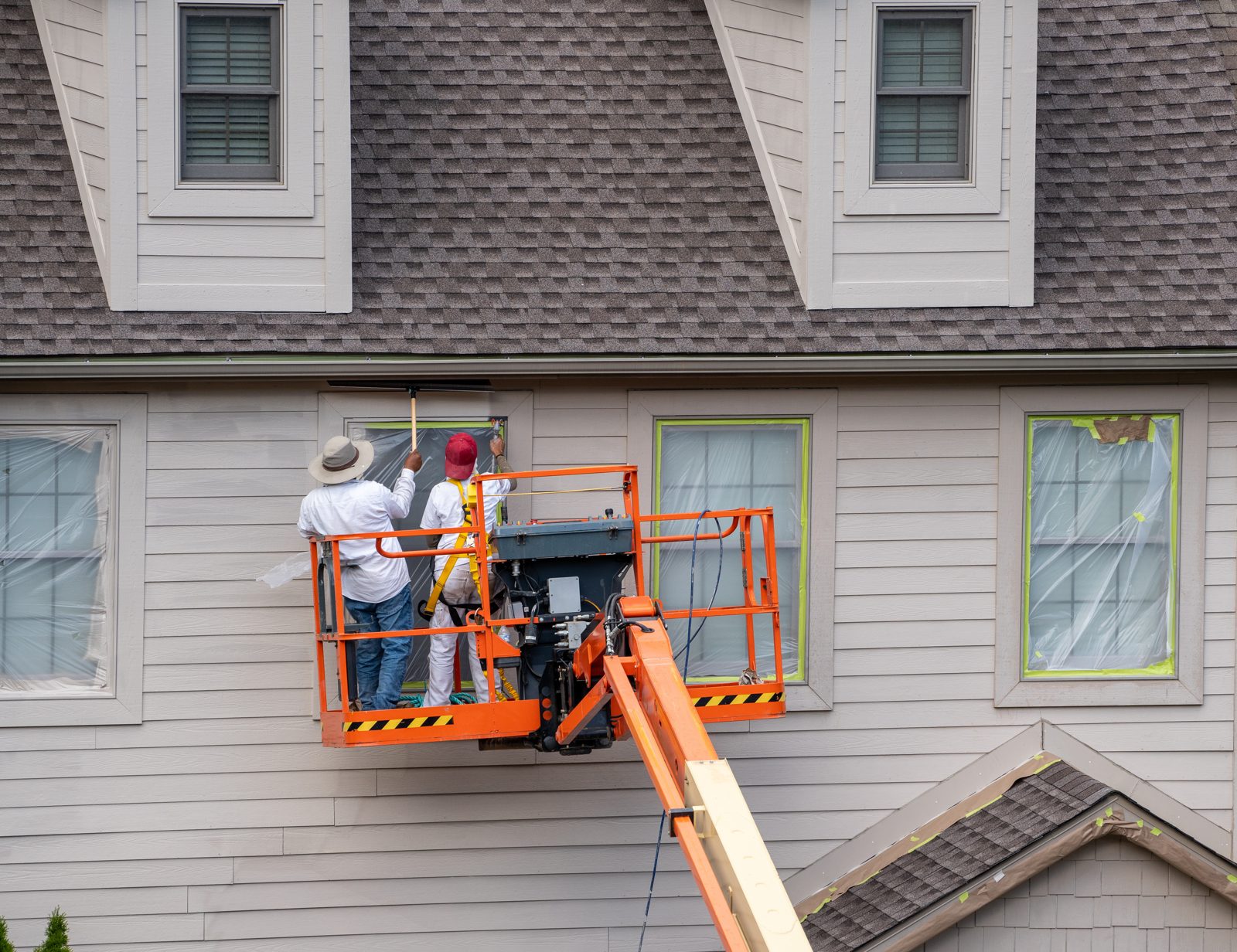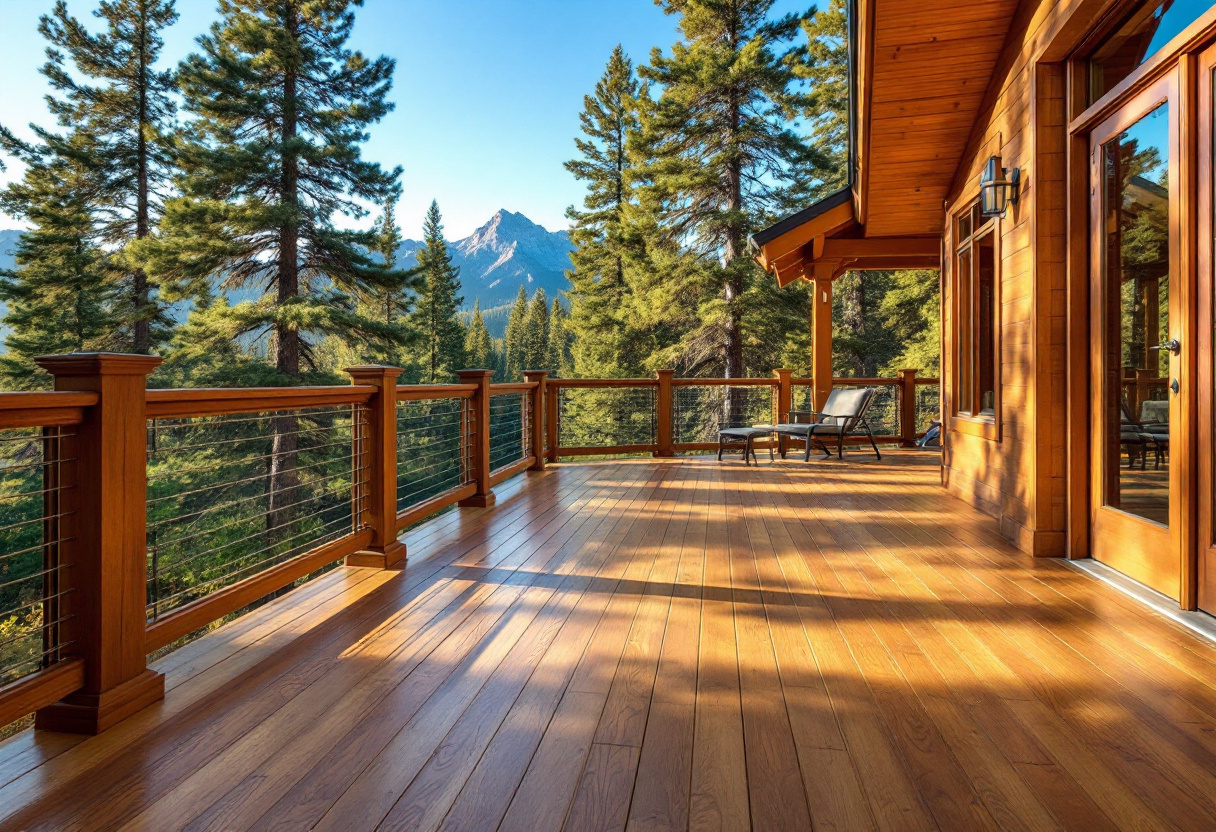
Choosing a deck stain feels like it should be simple — pick a color, buy a can, roll it on. But the single most important decision isn't the color at all. It's the opacity: clear, transparent, semi-transparent, or solid. That one choice determines how much of your wood grain shows, how long the finish lasts, and — up here in the Sierra — whether your deck survives another winter of UV, snow, and freeze-thaw looking great or looking tired. Here's how the options really compare, and how to match the right one to your deck before the weather turns.
If your boards need attention before any stain goes on, start with our guide to deck staining prep and timing in the Sierra — prep is what makes any of these finishes actually last.
The opacity spectrum, from clear to solid
Every deck stain sits somewhere on a scale of how much pigment it carries. More pigment means more sun protection but less visible wood grain. Understanding that trade-off is the whole game:
- Clear / water-repellent sealer. No color, no UV protection to speak of. It beads water for a season but leaves wood exposed to the sun that does most of the damage at altitude. Fine as a short-term measure, weak as a real finish here.
- Transparent / toner. A hint of tint with a little UV protection, showing the wood almost fully. Beautiful on new cedar or redwood, but the shortest-lived of the pigmented options.
- Semi-transparent. Enough pigment to protect against UV while still letting the grain and texture read through. The most popular choice for decks in good condition — natural-looking and durable.
- Solid (opaque). Covers the wood like a paint while still soaking in like a stain. Grain texture stays, but the color is uniform. Maximum UV and moisture protection, and the longest-lasting option.
For most Sierra homeowners, the real decision comes down to the two workhorses in the middle-to-heavy range: semi-transparent and solid.
Semi-transparent stain: the natural look
Semi-transparent stain is what most people picture when they imagine a “stained” deck — warm, natural wood tones with the grain showing through. It penetrates the wood rather than forming a thick film on top, which means it won't peel or flake the way a failing paint does. Instead it fades gradually and evenly, so touch-ups and recoats blend in cleanly.
The catch is longevity. Because it carries less pigment, it offers less of a shield against the intense high-altitude sun. On a fully exposed Sierra deck, a semi-transparent finish often needs a maintenance coat every two to three years — sooner on south- and west-facing boards that take the most sun and snow. It's the right call when your wood is relatively new, in good shape, and worth showing off.
Semi-transparent shows off the wood. Solid protects it. In a climate this harsh, that's the real trade-off.
Solid stain: maximum protection
Solid stain hides the wood's color and grain pattern but keeps its texture, giving you a uniform, painted-looking finish that still breathes like a stain. That heavy dose of pigment is exactly what blocks UV, so solid finishes typically last three to five years or more between maintenance coats — a real advantage where the sun is punishing and the season for outdoor work is short.
Solid stain shines in a few specific situations:
- Older or weathered decks where the wood has gone gray, splotchy, or mismatched and you want a clean, consistent look.
- Previously painted or solid-stained decks, since you generally can't go back to a transparent finish once opaque pigment is in the wood.
- Pressure-treated lumber and lower grades of wood whose grain isn't worth showing off in the first place.
- Homeowners who want the longest interval between recoats and don't mind a more finished, less rustic appearance.
The main watch-out: solid stain on high-traffic horizontal boards can wear in walking paths over time, and because it sits closer to the surface, a poor prep job shows up faster. Done right on a well-cleaned deck, though, it's the most durable choice on the shelf.
Why the Sierra climate tips the scale
In a mild, humid climate the choice between semi-transparent and solid is mostly about looks. Up here, it's about survival. Our decks face a stack of stresses that chew through finishes faster than almost anywhere:
- Thin-air UV. At Tahoe and Carson Valley elevations, there's far less atmosphere filtering the sun. UV breaks down finishes and grays out bare wood remarkably fast.
- Heavy snow load. Weeks of snow sitting on deck boards drives moisture into the wood and keeps the surface saturated far longer than a rain shower ever would.
- Freeze-thaw cycling. Water that soaks into unprotected or under-protected wood expands as it freezes, opening the grain and lifting fibers with every cycle — the same force we cover in our look at what Sierra winters do to exterior finishes.
The takeaway: whatever opacity you choose, don't cut corners on it. A cheap clear sealer on a mountain deck is a false economy. If you love the natural look, buy a premium semi-transparent and plan to maintain it. If you'd rather stain and forget it for a few years, solid is the safer bet at this elevation.
Oil-based vs. water-based — a quick note
Alongside opacity, you'll choose a base. Oil-based stains penetrate deeply and are forgiving to apply, which is why many pros still favor them for bare mountain wood — though they dry slowly and are increasingly restricted by product regulations. Modern water-based stains have closed the gap: they resist UV fading and mildew, clean up with water, and hold their color well. The most important rule is compatibility — oil and water-based products don't always layer over each other cleanly, so the right base often depends on what's already on your deck. When in doubt, that's a question worth asking before you buy.
How to decide for your deck
Here's the short version we walk homeowners through on site:
- New cedar or redwood you want to show off? A quality semi-transparent, maintained on schedule.
- Weathered, gray, or previously painted deck? Solid stain for a clean, uniform, long-lasting reset.
- Pressure-treated or lower-grade lumber? Solid, almost every time — there's little grain to lose.
- Want the fewest maintenance coats? Solid, and put the savings toward premium product and prep.
- Not sure the wood can take another season bare? Don't wait — timing matters as much as product, which is why we also cover the best time to tackle exterior work in Northern Nevada.
Get the finish — and the timing — right
Stain opacity, base, wood condition, and prep all interact, which is why the longest-lasting deck jobs come from planning them together rather than grabbing whatever's on the shelf. An in-person look lets us read your wood's condition, sun exposure, and existing finish before recommending an opacity and product that will actually go the distance through a Sierra winter.
At Ambition Painting, we handle deck and fence staining as part of our full exterior finishing work across Reno, Carson City, Minden & Gardnerville, and the Tahoe Basin — and we're glad to walk your deck and recommend the right stain before you commit to a gallon. Quality. Precision. Ambition.