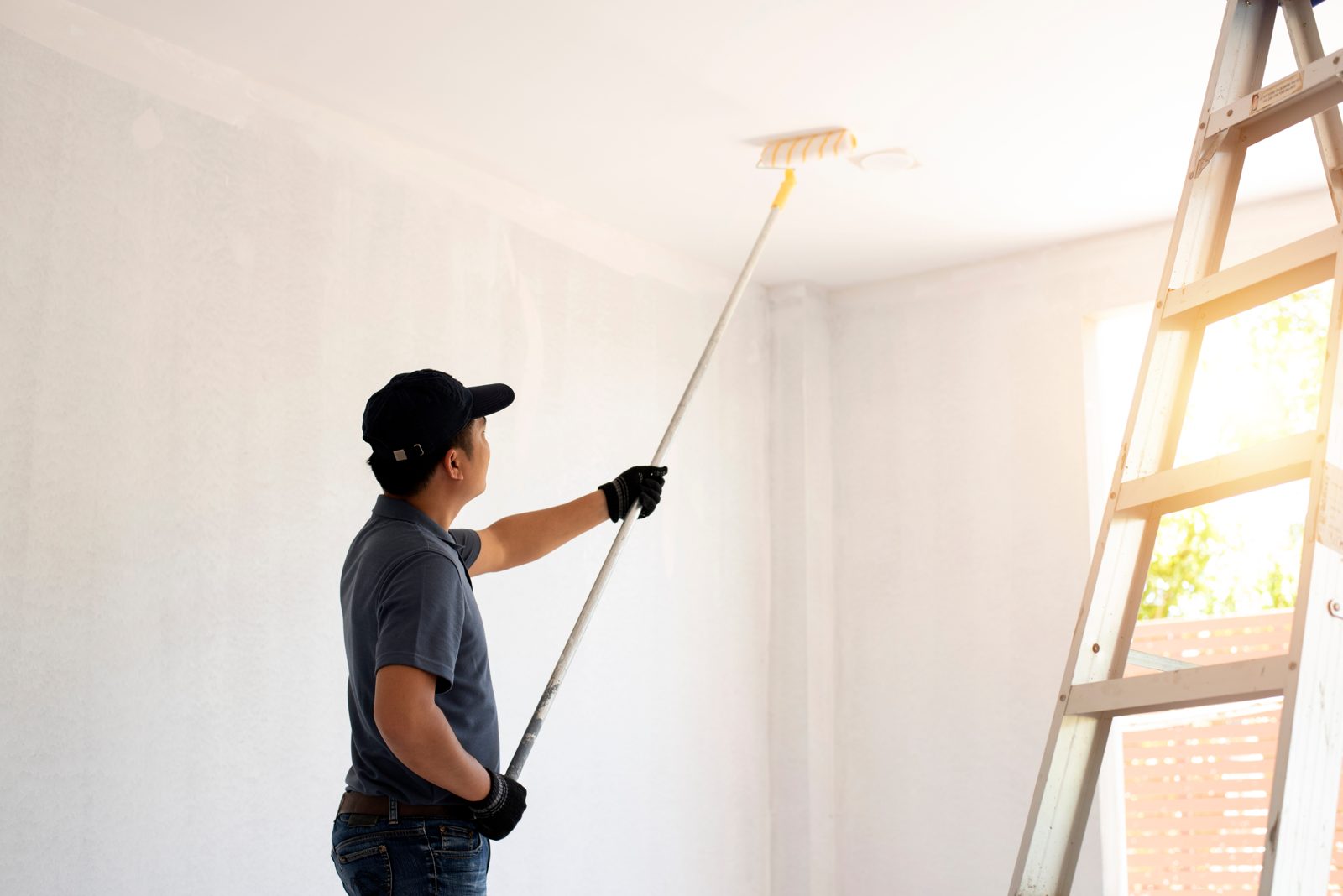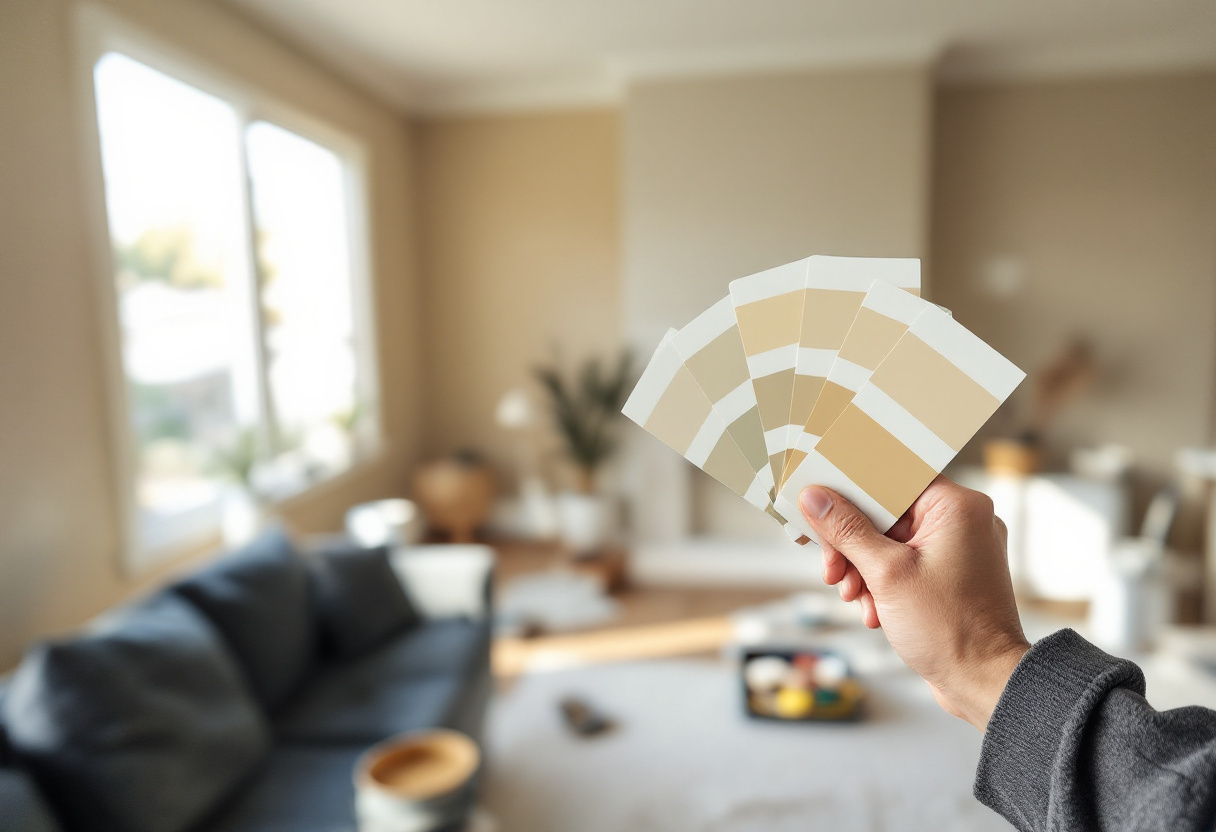
That “fresh paint” smell most of us grew up with isn't just a smell — it's a cloud of solvents evaporating into the air you breathe. For decades that was simply the cost of a new coat of color. It isn't anymore. Low-VOC and zero-VOC paints have gone from a niche request to the standard for healthier, more comfortable homes, and they matter even more at Reno and Tahoe elevations, where thin, dry air and long window-shut winters change how a freshly painted room feels. Here's what the labels actually mean, and how to choose a finish that's gentler on your family and your air.
What “VOC” really means
VOC stands for volatile organic compounds — carbon-based solvents that evaporate easily at room temperature. In paint, they help the product flow, level, and dry. The problem is where they go: as the coating cures, those compounds off-gas into your indoor air, and that's what you're smelling for hours or days after a room is painted. Traditional oil-based and older latex paints could contain 200–400 grams of VOCs per liter or more.
Two labels have become the shorthand for better options:
- Low-VOC paint keeps those compounds under a defined limit — commonly 50 grams per liter or less for flat finishes, with slightly higher caps for glossier sheens.
- Zero-VOC paint contains only a trace amount, typically under 5 grams per liter before any tint is added.
Neither is literally free of every emission, and adding deep colorant can nudge the number back up. But both release dramatically less than the paints they replaced — and you notice the difference the moment you walk into a freshly painted room.
Why it matters more at altitude
Indoor air quality is a bigger deal than most homeowners realize, because we spend the overwhelming majority of our time indoors — and even more of it inside during a Sierra winter. When the temperature drops and windows stay sealed for months, there's nowhere for off-gassing solvents to escape. A room painted in January with conventional paint can hold that chemical haze far longer than the same room painted with the windows open in June.
Altitude adds its own wrinkle. The thin, dry air around Reno, Carson City, and the Tahoe Basin already changes how paint flows and cures — one of several reasons painting a mountain interior isn't like painting anywhere else. Lower-VOC formulas reduce the amount of solvent being released into that already-dry air, which makes the whole process more comfortable to be around, especially for anyone with asthma, allergies, or chemical sensitivity.
The real luxury of low-VOC paint isn't the chemistry — it's being able to sleep in your bedroom the same night it was painted.
Who benefits most
Everyone breathes easier with lower emissions, but a few households feel the difference immediately:
- Families with young children, whose developing lungs are more sensitive to airborne irritants.
- Older adults and anyone with respiratory conditions like asthma or COPD.
- Pet owners, since animals spend nearly all their time at floor level in the home.
- Anyone painting a bedroom, nursery, or home office they can't easily vacate for days.
- Allergy-prone households already managing Northern Nevada's dust and pollen load.
If a nursery or a frequently used room is on your list, low- or zero-VOC paint is less a preference and more a straightforward upgrade in comfort.
Does it still perform? Yes — with one caveat
The old knock on low-VOC paint was that it didn't apply as smoothly or hold up to scrubbing. That reputation is a decade out of date. Today's premium low- and zero-VOC lines from every major manufacturer level beautifully, resist washing, and keep their color as well as anything on the shelf — often better. The caveat is the one that applies to all paint: the finish is only as good as the preparation and application underneath it. A healthier can of paint rolled over greasy, unprimed, or poorly patched walls will still disappoint.
That's why the VOC rating is the start of the decision, not the end of it. The sheen you choose still governs how washable and forgiving the finish is — our paint sheen guide walks through where flat, eggshell, satin, and semi-gloss each belong. And the color still has to work in Sierra light, which runs cooler and more intense than most showrooms; a professional color consultation looks at how a shade behaves in your actual room before you commit.
Where lower-VOC finishes shine beyond the walls
Paint is only one surface in your home. Some of the highest-impact, closest-quarters finishes are the ones you touch and cook around every day. Kitchen cabinets are a perfect example: a cabinet refresh puts a freshly coated surface inches from where your family eats, so lower-emission products and a controlled, well-ventilated process matter even more there. Our cabinet refinishing work is built around exactly that kind of clean, dust-managed finish, and if you're weighing a kitchen update, painted vs. stained cabinets compares the two paths.
The same thinking carries across all of our interior painting projects — from a single accent wall to a whole-home repaint timed for the season. If you're planning the work, fall and winter are quietly the best time to paint an interior here, and lower-VOC paint is what makes doing it with the windows closed genuinely pleasant.
How to choose a healthier paint
A few practical pointers when you're specifying or requesting a finish:
- Read the actual number, not just the label. “Low-VOC” is a range; ask for the grams-per-liter figure if emissions are a priority.
- Account for the tint. Deep, saturated colors often need more colorant, which can add VOCs — ask for zero-VOC colorants when available.
- Look for third-party certifications like GREENGUARD Gold or an equivalent, which test for emissions, not just VOC content in the can.
- Pair it with good ventilation anyway. Lower emissions plus airflow is the healthiest combination, even in winter.
- Trust the prep. The cleanest paint in the world won't save a rushed job — longevity is still built in the preparation.
Whether you're repainting a bedroom in Reno, refreshing a cabin interior near Lake Tahoe, or updating a home in Carson City or Minden & Gardnerville, the healthier option is almost always the right one — and it rarely costs more.
Breathe easy — let's plan your project
A fresh coat of color should make your home feel better in every sense, not leave you airing the place out for a week. At Ambition Painting, we're happy to specify low- and zero-VOC products for your interior painting, cabinet refinishing, and color consultation projects across Reno, Carson City, Minden & Gardnerville, and the Tahoe Basin — and fall and winter are the ideal, climate-controlled season to get it done. Quality. Precision. Ambition.