A popcorn ceiling removal quote can swing from a few hundred dollars for a single room to several thousand for a whole house — and the gap has almost nothing to do with which contractor you call. It comes down to three variables: square footage, whether the texture tests positive for asbestos, and how much finish work it takes to turn a raw scraped ceiling into a smooth one. Here's what actually drives that number for homes around Reno, Carson City, and the Tahoe Basin, and what the process looks like from first call to final coat.
If you haven't already, it's worth reading why that texture is riskier than it looks before budgeting a project — the health and containment considerations there shape a lot of the cost breakdown below.
What actually drives the price
Every popcorn ceiling job prices out a little differently, but the same handful of factors explain almost all of the variation between a modest quote and a large one:
- Square footage. The most obvious driver — more ceiling means more scraping, more skim coat, and more drying time between steps.
- Ceiling height and access. A standard 8- or 9-foot ceiling is straightforward from a ladder. Vaulted great rooms, open stairwells, and two-story entries common in Tahoe cabins often require scaffolding or a lift, which adds real labor time.
- Paint layers over the texture. An untouched popcorn ceiling mists and scrapes relatively easily. One that's been painted over — which seals the texture and stops it from absorbing water — takes longer and sometimes needs a different removal approach entirely.
- Drywall condition underneath. Scraping reveals whatever the texture was hiding: seams, screw dimples, old water stains, hairline cracks. A ceiling that needs a full skim coat costs more than one that just needs light patching.
- Asbestos testing and abatement. Any home built before the mid-1980s should be sampled and lab-tested before anything gets disturbed. A negative result adds a modest testing fee; a positive result turns the job into regulated abatement work with its own cost structure.
Typical price ranges around Northern Nevada
These are general ranges, not a quote — every ceiling is different once you're standing under it — but they're a useful starting point for budgeting:
- Single room, asbestos-free, easy access: roughly $2–$4 per square foot for scrape, skim coat, and repaint. A 300-square-foot living room lands around $600–$1,200.
- Whole single-story home: commonly $3,000–$8,000+, depending on total square footage and how much drywall repair is involved.
- Vaulted ceilings, stairwells, or multi-story access: add a meaningful premium for scaffolding or lift rental and the extra labor time working overhead.
- Asbestos lab testing: typically a modest add-on when bundled into a contractor's project scope; a positive result changes the entire cost structure, since abatement is regulated work with specific containment and disposal requirements.
For comparison, this is the same logic behind the numbers in what it costs to hire interior painters in Reno — square footage sets the baseline, and prep work is what moves the final number up or down.
What the removal process actually looks like
- Walkthrough and testing. A contractor measures the space and, for older homes, pulls a small texture sample for lab testing before touching anything.
- Containment. Plastic sheeting goes up floor to ceiling, furniture gets moved or covered, and HVAC vents are sealed so dust and debris stay in one room.
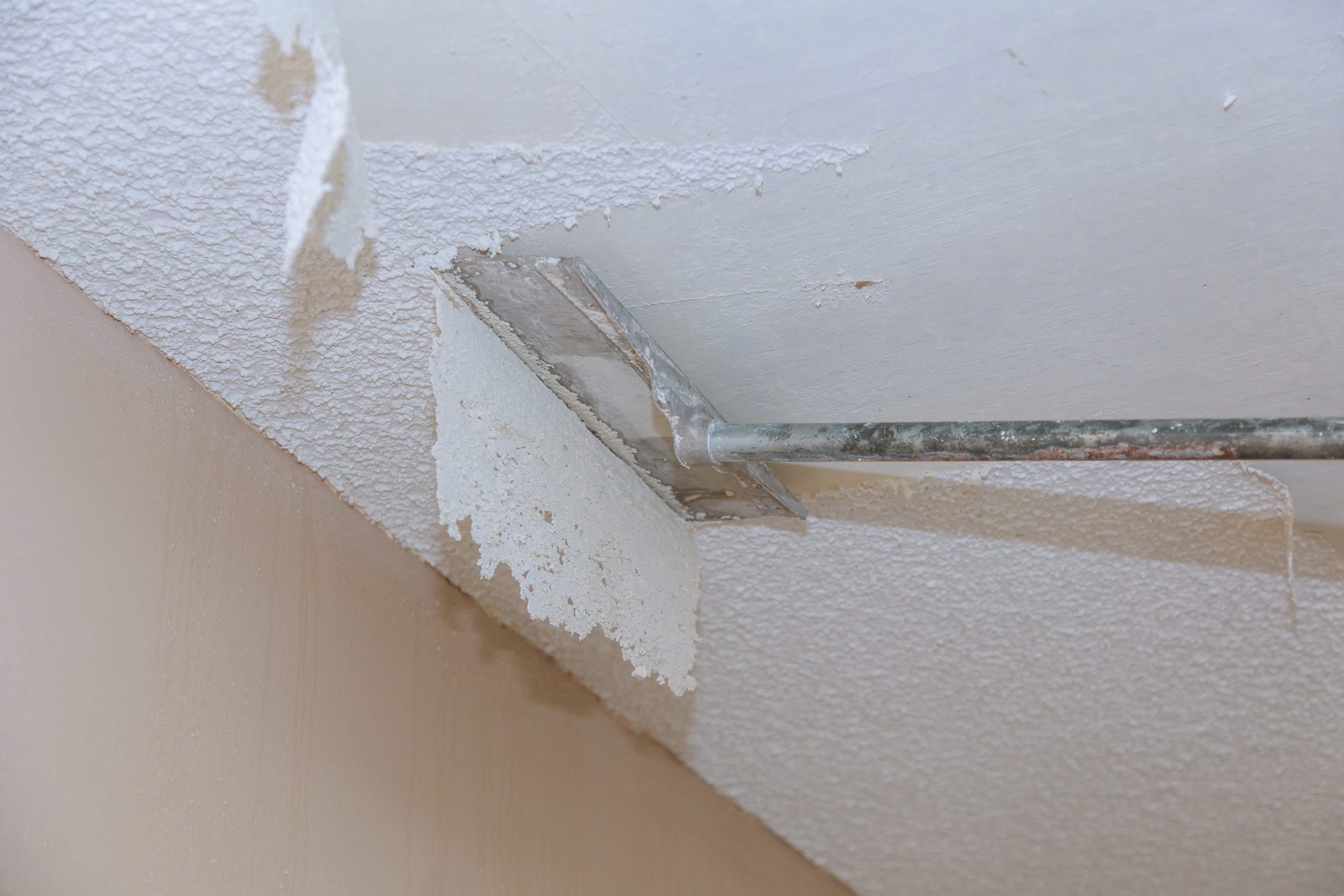
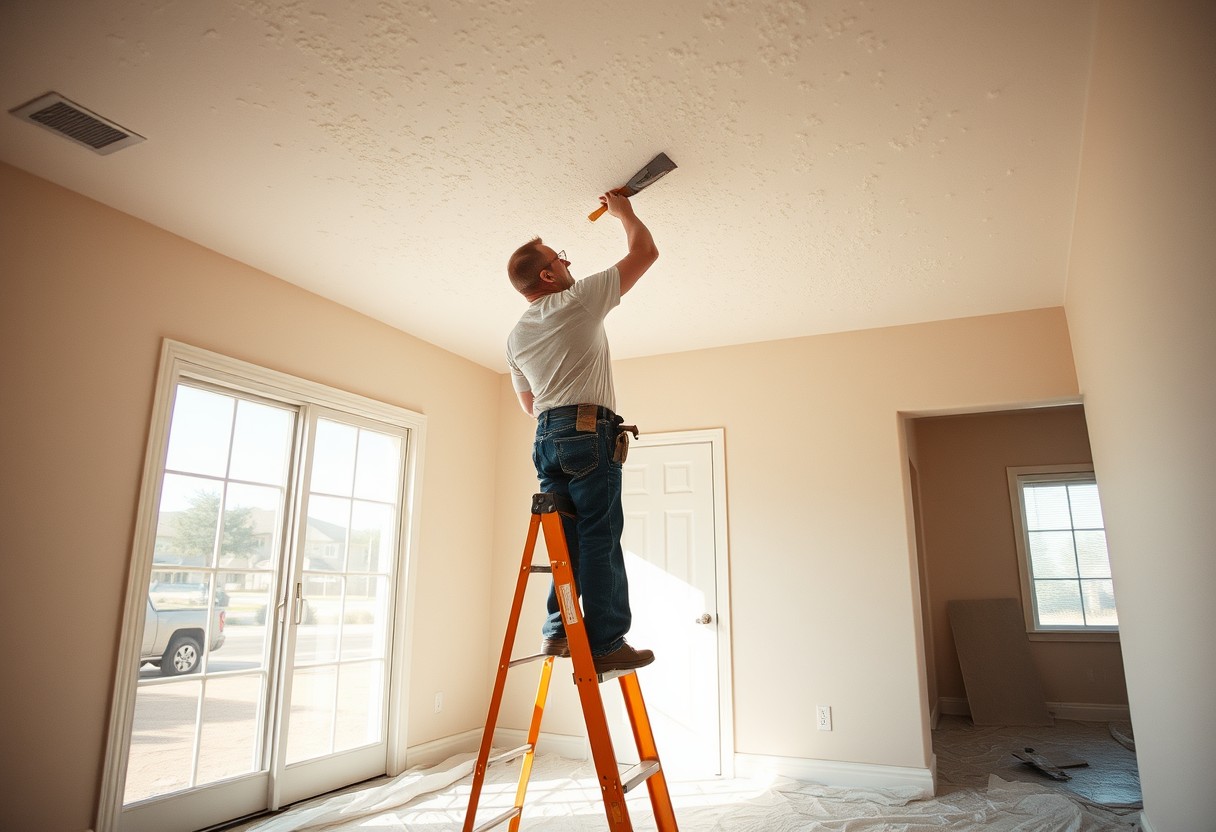
- Mist and scrape. Water softens the texture so it lifts off in sheets rather than clouds of dust. Painted-over ceilings sometimes need a different technique or a skim-over approach instead.
- Drywall repair and skim coat. This is the step that determines the finished look — filling scrape marks, re-taping seams, and floating the entire surface level.
- Sand and prime. The skim coat gets sanded smooth and sealed with the right primer for a flat ceiling finish.
- Final paint. A proper ceiling paint goes on, and the room gets a full clean-up and walkthrough.
The scraping is the cheap part. What you're really paying for is the drywall finish that makes the ceiling look like it was never textured at all.
DIY vs. hiring a pro: the real comparison
A DIY popcorn ceiling removal looks cheap on paper — a garden sprayer, a scraper, and a weekend. In practice, the hidden costs add up fast: containment plastic and tape, a texture sprayer or skim-coat tools if you don't already own them, disposal fees for the wet debris, and the time cost of a job that almost always takes longer than planned overhead. That's before factoring in the risk of gouging drywall with an overly aggressive scrape, or disturbing a ceiling that should have been tested first.
The most common outcome we see with DIY attempts isn't a failed removal — it's a ceiling that gets scraped successfully but never gets properly skim-coated, leaving a wavy, patchy surface that catches light in every direction. Fixing that after the fact usually costs more than a professional job would have from the start, since a contractor now has to correct the texture before finishing it properly.
Getting an accurate number for your home
Online calculators and per-square-foot averages are a fine starting point, but they can't see your ceiling height, your drywall condition, or whether that texture was ever painted. An in-home walkthrough is the only way to get a number that actually holds once work begins — the same reason we always recommend one before locking in a budget, whether the project is a ceiling, a full interior repaint, or cabinet refinishing down the hall.
At Ambition Painting, we handle popcorn ceiling removal from testing referral through final paint across Reno, Carson City, Minden & Gardnerville, and the Tahoe Basin, and we're glad to walk your ceiling and give you an honest number before you commit to anything. See more on our popcorn ceiling removal & drywall repair page. Quality. Precision. Ambition.