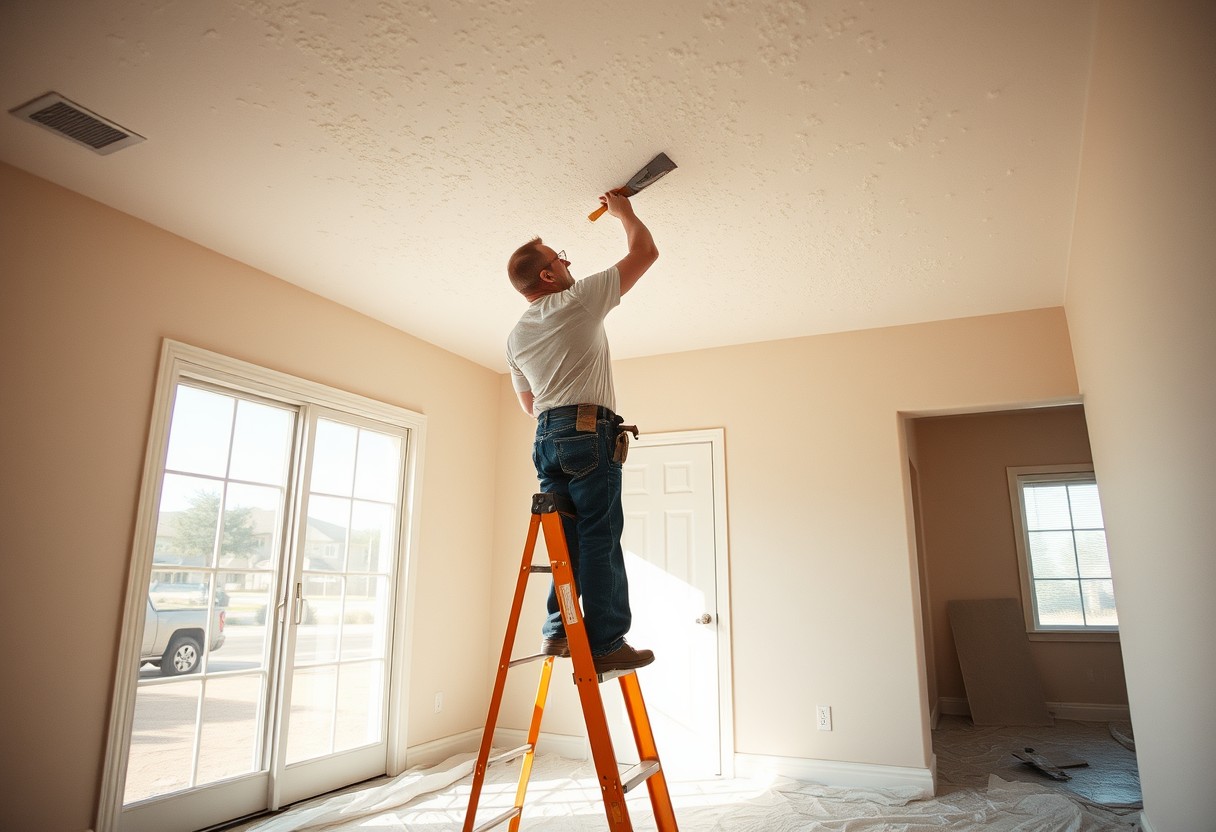
Popcorn ceilings — the bumpy, "cottage cheese" texture sprayed across millions of homes from the 1950s into the 1980s — look like a cosmetic nuisance. In reality, what's overhead can carry a health risk, and getting rid of it is far more involved than scraping and repainting on a Saturday.
That texture was popular for good reasons at the time: it hid drywall imperfections, dampened sound, and went up fast and cheap. The problem is everything we've learned since.
The asbestos question comes first
This is the part homeowners most often overlook. Many textured ceilings installed before the mid-1980s contain asbestos, which was added to ceiling products for fire resistance. Left alone and intact, it's generally not a hazard. But the moment you scrape, sand, or even aggressively brush that ceiling, you can release microscopic fibers into the air — and those fibers are linked to serious, irreversible lung disease.
You cannot tell whether a ceiling contains asbestos just by looking at it. The only responsible first step on any older home is to have a small sample tested by a lab before anything is disturbed. If it comes back positive, removal becomes a regulated abatement job with specific containment and disposal rules — not a DIY project, and not something to "just be careful" around.
It's messier — and more permanent — than it looks
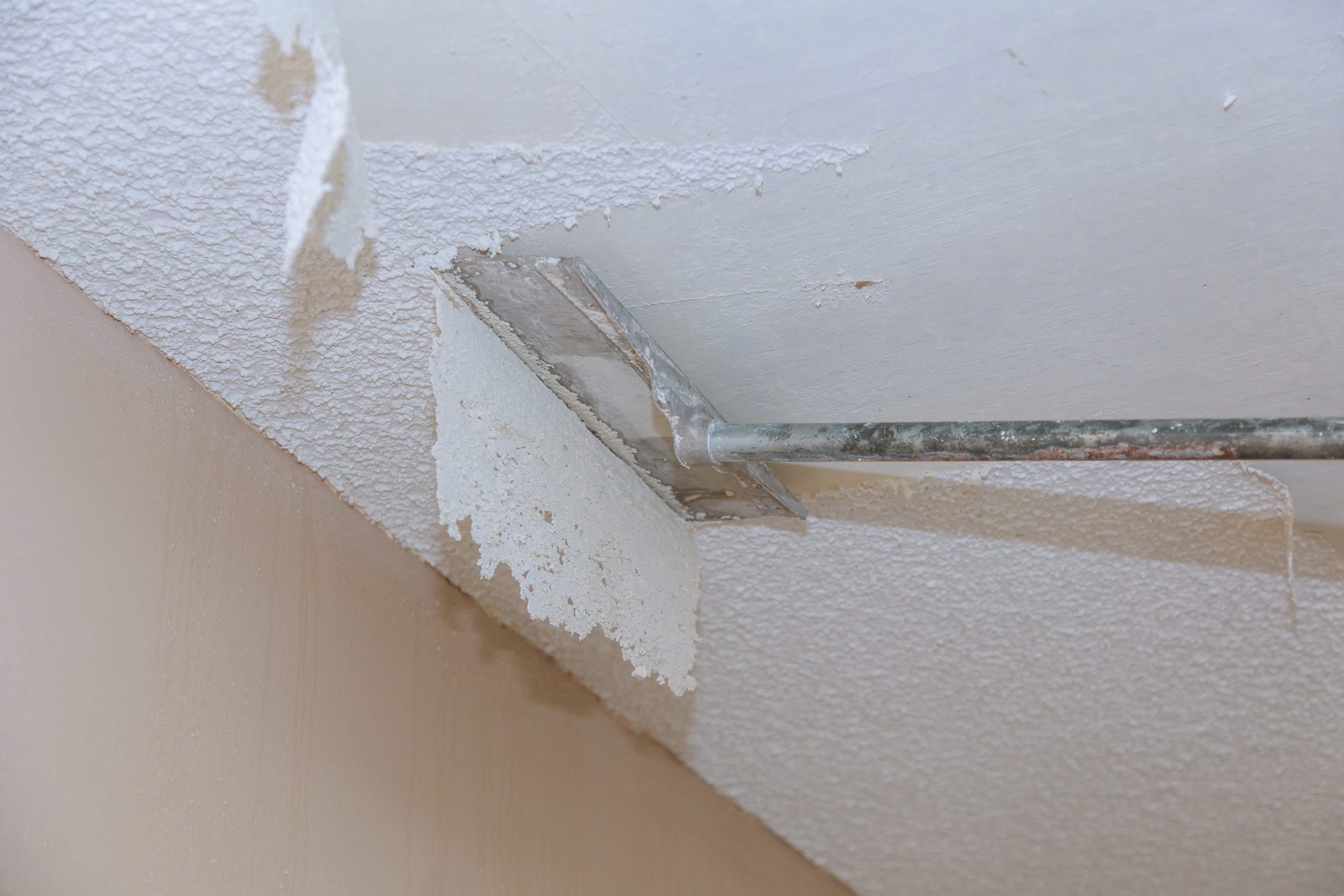
Even when a ceiling is asbestos-free, removal is a genuinely big job. The standard method is to mist the texture with water to soften it, then scrape it off — which means a slurry of wet, gritty material raining down onto everything below. Floors, walls, fixtures, and any furniture that can't be removed all have to be sealed off completely.
And here's the catch people don't expect: scraping is the easy part; the finish is the hard part. Underneath that texture is bare, often unfinished drywall with exposed seams, screw dimples, and gouges left by the scraper itself. A raw scraped ceiling almost never looks good. To get a clean, modern, flat ceiling you have to:
- Skim-coat the entire surface with joint compound to fill scrape marks and level it.
- Sand it smooth — another dusty, exacting step done over your head.
- Re-tape or repair any seams and corners that the texture was hiding.
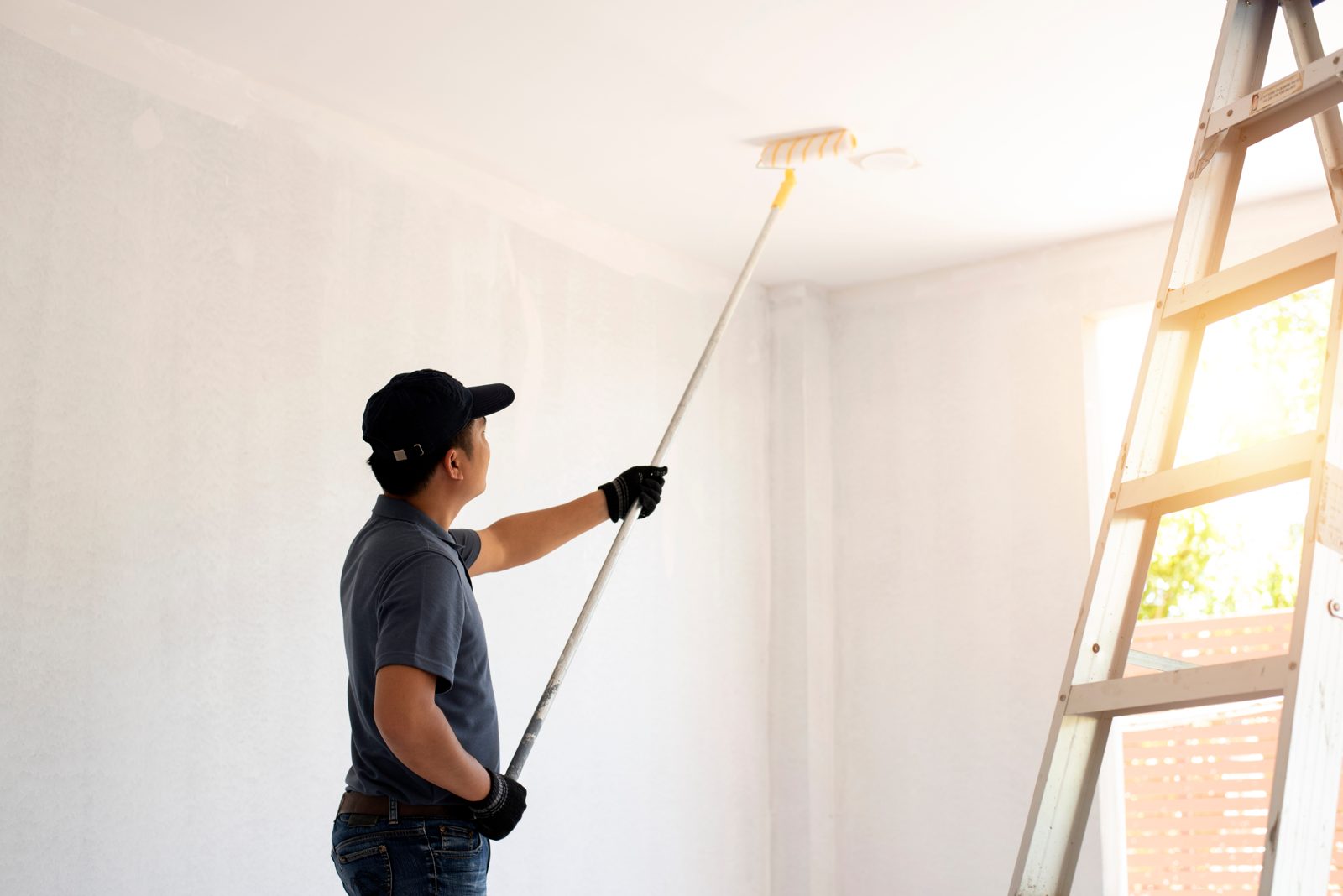
- Prime with the right sealer, then apply a proper ceiling paint.
Done well, the result is transformative. Done in a hurry, you trade lumpy texture for a wavy, patchy ceiling that catches light in all the wrong ways.
Already painted? That changes the approach
If a previous owner painted over the popcorn, the water-misting trick often won't work — paint seals the texture so it won't absorb moisture and soften. Scraping dry is brutal, slow, and far more likely to tear into the drywall. In those cases it's frequently smarter to skim-coat over the texture, or to install a new ceiling surface, rather than fight it off by force. Knowing which path a specific ceiling needs is exactly the judgment a professional brings.
Why it's worth doing right
Smooth ceilings have become a genuine selling point. They make rooms feel taller, brighter, and more current; they're far easier to clean and repair; and they quietly signal that a home has been cared for. In the Reno and Tahoe market, where buyers are comparing finishes closely, dated popcorn texture can read as deferred maintenance.
The value isn't only in removing the texture — it's in the flawless, light-friendly ceiling you're left with afterward.
Why hire a professional for this one
Popcorn removal sits at the intersection of a possible health hazard, a major containment challenge, and a demanding finishing job — which is a lot to take on with a spray bottle and a putty knife. A professional crew handles testing referrals, seals the space properly, controls the mess, and — most importantly — delivers a smooth, primed, finished ceiling rather than a raw scraped one.
At Ambition Painting, we manage popcorn-ceiling projects across Carson City, Reno, Minden, and the Tahoe Basin from start to finish, so you end up with a clean, modern ceiling and none of the dust, risk, or guesswork. If you've got a ceiling you've been staring at for years, we're glad to take a look and tell you honestly what it'll take.