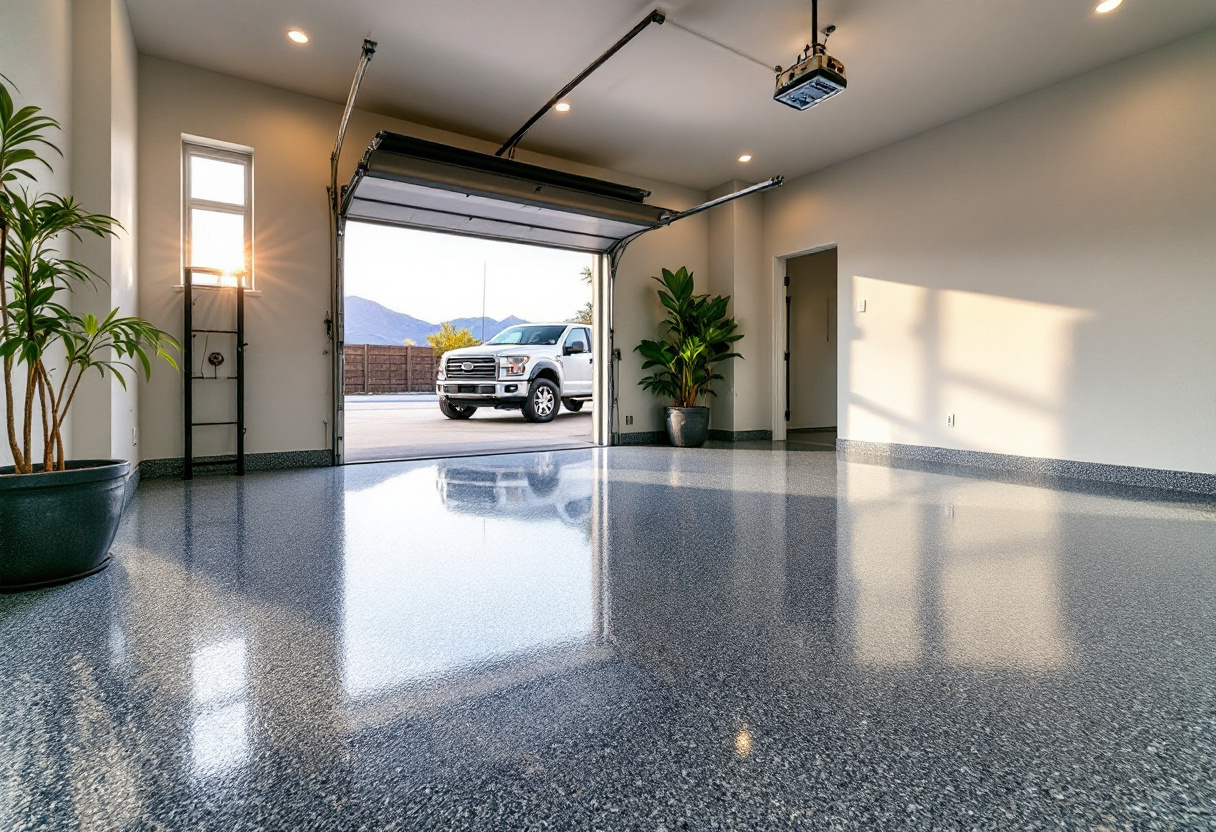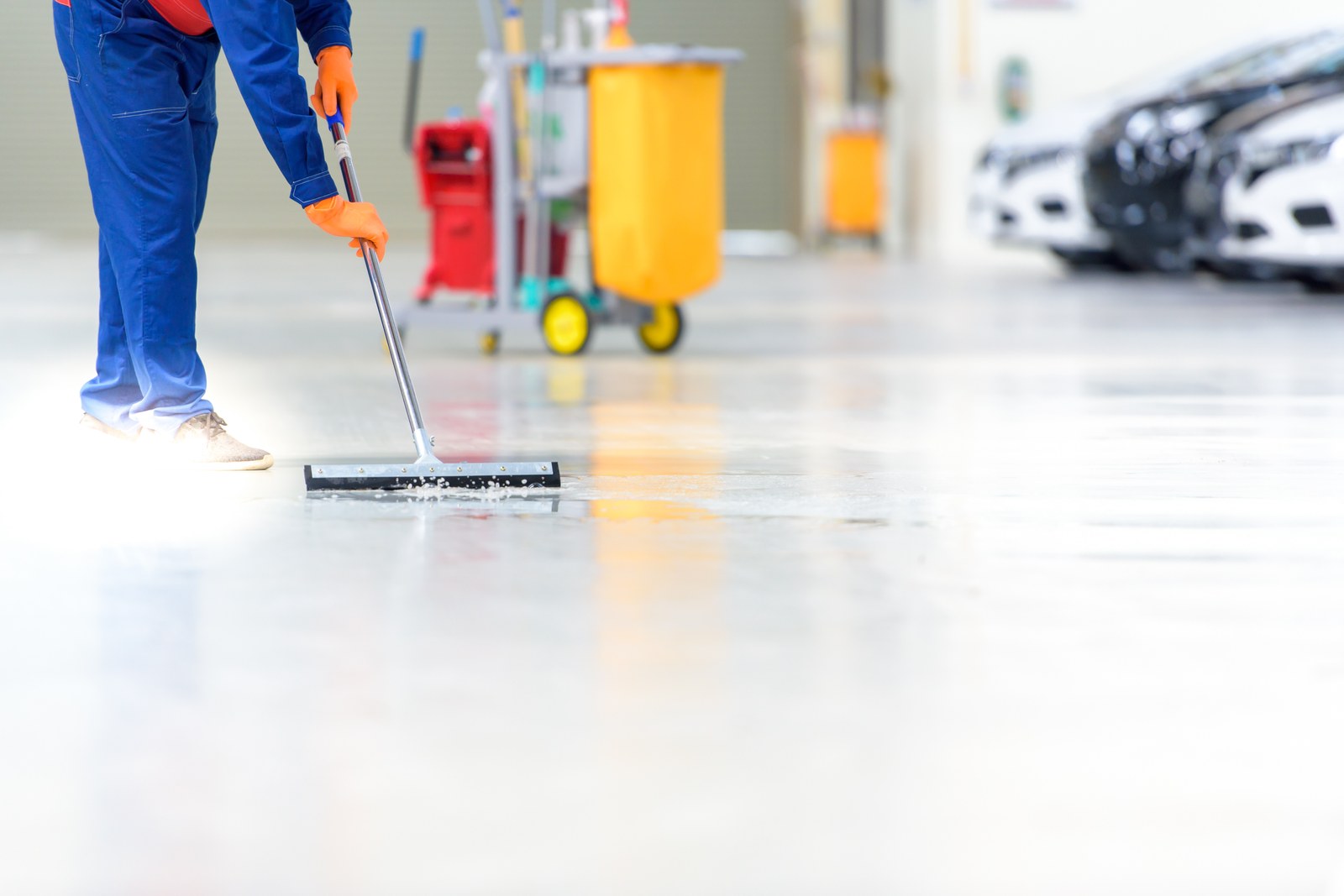
The day a new epoxy floor cures, it's the best-looking surface in the house — deep gloss, clean color, not a scuff in sight. What happens over the next five years comes down almost entirely to how it's cleaned, not how it was installed. A great coating can be dulled by the wrong mop bucket routine, and a good-but-not-perfect one can be kept looking sharp for a decade with the right habits.
Epoxy and polyaspartic coatings are tough, but they aren't maintenance-free, and Northern Nevada throws a few specific challenges at a garage floor that don't show up in a generic care sheet. Here's what actually keeps a coated floor performing — and what quietly wears it down.
The weekly and monthly basics
Most of the damage to a coated floor isn't chemical — it's abrasion from grit being dragged across the surface underfoot and under tires. A dry dust mop or soft push broom once a week is the single highest-value habit, because it clears away the sand and small stones that act like sandpaper every time a car rolls over them or a boot scuffs across.
Layer a proper wet clean on top of that every two to four weeks:
- Sweep or dust-mop first — never wet-mop over loose grit, since that just drags it around like a scouring pad.
- Use warm water with a pH-neutral floor cleaner, or a small amount of dish soap. Avoid anything labeled "heavy-duty degreaser" unless it's specifically rated safe for epoxy.
- A soft microfiber mop or squeegee mop lifts water and residue without scratching, and dries faster than a string mop.
- Rinse with clean water if you used soap, so a hazy film doesn't build up on the gloss over time.
What Nevada garages deal with that most don't
Elevation and climate change the maintenance math a little. Winter driving across Reno, Carson City, and the passes into Tahoe means road salt and magnesium chloride deicer riding in on tires and undercarriages, and both are more aggressive on a coating than plain dirt if they're left to sit and dry into a white residue. During snow season, a more frequent rinse — even just a quick pass with a garden hose and squeegee — keeps that residue from concentrating in one spot near where you park.
The high-desert sun matters too. Garages with a south- or west-facing door that stays open a lot get more direct UV than most coatings see elsewhere, which is exactly why a UV-stable polyaspartic top coat earns its keep here — it resists the yellowing that plain epoxy is prone to under sustained sun exposure.
The floor that still looks new in five years isn't the one that never got dirty — it's the one that got cleaned the right way, consistently.
What to avoid
A handful of common household products do real, if slow, damage to epoxy and polyaspartic coatings:
- Vinegar and citrus cleaners — both are acidic enough to etch the finish and dull the gloss over repeated use.
- Bleach and ammonia-based cleaners — too harsh for the coating's chemistry; stick to neutral-pH products.
- Steel wool or abrasive scrub pads — these leave fine scratches that catch light and make the whole floor look hazier, even if each individual scratch is barely visible.
- Standing puddles — coatings handle brief exposure fine, but antifreeze, oil, or de-icer left to sit for days can still stain or soften the surface over time.
Handling spills, stains & hot tire marks
Motor oil, coolant, and brake fluid should be blotted up promptly with an absorbent pad rather than wiped, which just spreads a thin film across more of the floor. A follow-up clean with warm water and a neutral degreaser handles the rest in almost every case.
Hot tire pickup — the faint discoloration that sometimes appears where a car parks in the same spot — is usually the tire's own plasticizers reacting with the coating, not a true stain. It typically lifts with a soft brush and soapy water; resist the urge to reach for solvents or a scraper, which tend to dull the finish faster than the mark itself would fade on its own.
Protecting the floor day to day
- Use furniture pads or rubber cups under jack stands, tool chests, and shelving legs so point loads don't dent or scuff the coating.
- Keep a set of thick mats or a parking pad under a vehicle prone to leaking, rather than letting fluid sit directly on the coating.
- Sweep up sand and gravel tracked in from gardening, off-roading, or landscaping work before it gets ground underfoot.
- Reserve the shop-vac or a soft-bristle attachment for corners and edges where a broom can't quite reach.
When it's time for a fresh top coat
Even well-maintained floors eventually show wear — usually as a dulled path where tires roll in and out, faint scratching that catches afternoon light, or thin spots where the color underneath starts to show through. That's not a sign the original coating failed; it's simply the top layer doing its job by taking the wear instead of the concrete underneath.
The good news is that recoating a sound existing floor with a fresh polyaspartic top coat is a fraction of the time and cost of a full strip-and-redo, since the heavy lifting — the ground concrete and epoxy base — is often still perfectly intact. If you're not sure whether your garage floor needs a full redo or just a refresh, we've covered how long these floors really last and what changes that timeline.
And if your flooring plans run past the garage — carpet, hardwood, or luxury vinyl inside the house — coatings aren't the answer there. For those rooms, our Carson City neighbors at Landmark Flooring are the local showroom to visit, serving the same Carson City, Reno, and Gardnerville area we paint in.
At Ambition Painting, we install and maintain epoxy and polyaspartic floors across Reno, Carson City, Minden & Gardnerville, and the Tahoe Basin, and we're glad to take a look at a floor that's lost its shine and tell you honestly whether it needs a simple clean, a top coat refresh, or nothing at all. See more on our epoxy garage floor coating page, or check local specifics on our Reno epoxy flooring page. Quality. Precision. Ambition.