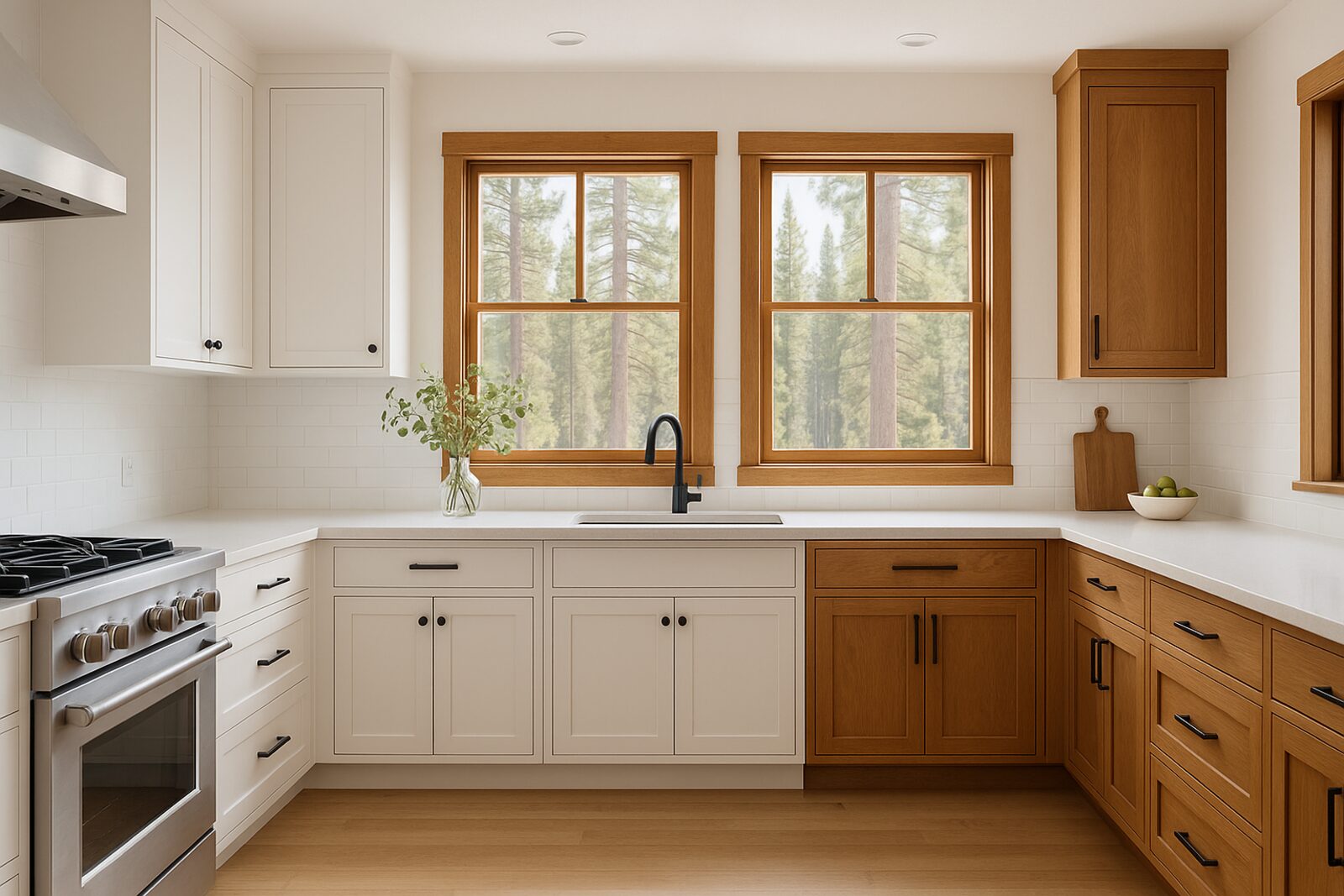
Most homeowners file “renovation season” under spring and summer — the months for exterior paint, deck work, and curb appeal. But in Northern Nevada, the snowy stretch from late fall through early spring is quietly the best window for a whole category of work: the indoor finishing projects that transform how your home feels from the inside out. Cabinet refinishing, epoxy garage floors, and popcorn ceiling removal all happen in controlled conditions, so a storm outside is irrelevant to the result. Here’s why the cold months are the smart time to tackle them, and which projects make the most of the season.
Why winter works in your favor
The logic is simple: these projects don’t depend on the weather, but the scheduling around them does. When exterior painting and staining slow down for the winter, crews have more availability, timelines get more flexible, and your project gets undivided attention rather than being squeezed between summer’s outdoor jobs. The same off-season advantage that makes fall and winter the best time to paint your home’s interior applies to every indoor finishing project on this list.
There’s a practical comfort angle, too. You’re spending more time indoors in January than you are in July, which means you actually get to enjoy a refreshed kitchen, a clean garage, or a smooth, modern ceiling during the season you live inside the most — and you walk into spring with the inside of your home already done.
Snow on the ground isn’t a reason to pause a project — indoors, it’s a green light. The work that defines how your home feels happens in a climate-controlled room, not out in the weather.
1. Cabinet refinishing — a new kitchen by the holidays
If there’s one project built for winter, it’s refinishing your kitchen cabinets. The work is done entirely indoors in a dust- and temperature-controlled setup, where sprayed enamel levels out and cures into a smooth, factory-like finish no matter what the thermometer reads outside. Cold weather simply doesn’t touch the outcome.
What does change in winter is how much the result matters. The kitchen is where families gather over the holidays and through the long indoor months, so a refreshed one lands at exactly the right time. And refinishing is a fraction of the cost and disruption of replacement — if you’re weighing options, our breakdown of refinishing vs. refacing vs. replacing shows why refinishing wins on value for most kitchens, and our guide to what cabinet refinishing costs in Reno lays out the numbers.
Not sure which direction to take the look? Winter is a good time to settle that, too — our comparison of painted vs. stained cabinets helps you choose the finish that fits your home and your Sierra light. When you’re ready, our cabinet refinishing service handles the whole process, from prep to final coat.
2. Epoxy garage floors — done while the car’s parked anyway
Your garage takes a beating in winter: road salt, slush, snowmelt, and grit tracked in on tires and boots. That makes the cold months a surprisingly logical time to install an epoxy garage floor coating — a sealed, chemical-resistant surface that shrugs off exactly the mess the season throws at it, instead of letting it soak into bare, porous concrete.
The one real variable with winter epoxy is temperature. Standard epoxy needs the slab held within its cure range — generally above 50 to 55 °F — so a professional install includes heating the garage through the application and cure window. This is also where coating choice matters: polyaspartic systems cure across a wider, lower temperature range and are more forgiving in cold conditions, which our comparison of epoxy vs. polyaspartic coatings walks through in detail. Either way, a pro manages slab temperature and moisture so the floor bonds correctly.
If you’re still deciding whether it’s worth doing at all, our look at whether epoxy garage flooring is worth it in Nevada covers the durability and resale math, and once it’s down, keeping it pristine is easy — see our epoxy floor maintenance guide.
3. Popcorn ceiling removal — the mess stays inside
Dated popcorn ceilings make a whole house feel older than it is, and removing them is the kind of disruptive, dusty job you want to get out of the way during a season you’re not hosting backyard barbecues. Winter is ideal: the work is fully contained indoors, the room gets masked off, and you come out the other side with smooth, modern, paint-ready ceilings.
There’s a health reason to take this one seriously, not just an aesthetic one. Textured ceilings installed before the 1980s can contain asbestos, which is why professional removal starts with testing and proper containment — our article on the hidden risks of popcorn ceilings explains what’s at stake and why DIY scraping is a gamble. For budgeting, our guide to popcorn ceiling removal cost in Reno & Tahoe breaks down the price drivers and the step-by-step process. Our popcorn ceiling removal and drywall service handles testing, removal, and the smooth refinish in one coordinated job.
Bundle the indoor work while the crew is already there
Winter is also the natural time to combine projects. If the painters are already refinishing your cabinets, it’s efficient to have them smooth the ceilings and freshen the walls in the same stretch — one setup, one cleanup, one coordinated timeline. A full interior painting refresh pairs naturally with cabinet and ceiling work, and because everyone’s indoors with the windows closed this time of year, it’s worth using low-VOC and zero-VOC paint to keep the air clean while the house is sealed up against the cold.
Grouping the work also means you absorb the disruption once instead of spreading it across multiple seasons — and you step into spring with the entire interior finished rather than starting from scratch when the weather turns.
A season-by-season reality check
None of this means exterior work disappears from the calendar — it just shifts. Siding, trim, and deck staining belong to the warmer, drier stretch, which is why we map out the best time of year to paint an exterior in Northern Nevada separately. The takeaway is to match the project to the season: push outdoor jobs to spring and summer, and use the snowy months for the indoor transformations that genuinely don’t care what the sky is doing.
Whether you’re in Reno, Carson City, a cabin up at Lake Tahoe, or a home in Minden & Gardnerville, the same principle holds: the hardest months of the year outside are the easiest months to improve the inside.
Make winter count — let’s plan your indoor project
If there’s a kitchen, garage, or ceiling you’ve been meaning to deal with, the quiet winter calendar is the time to do it right. At Ambition Painting, we’ll walk your home, talk through which projects make sense to tackle now, and give you a clear plan and an honest timeline — all free and no-obligation. Book a winter project while the schedule is open and step into spring with the inside of your home already done. Quality. Precision. Ambition.